
The Eight Limbs of Yoga as a Healing Map
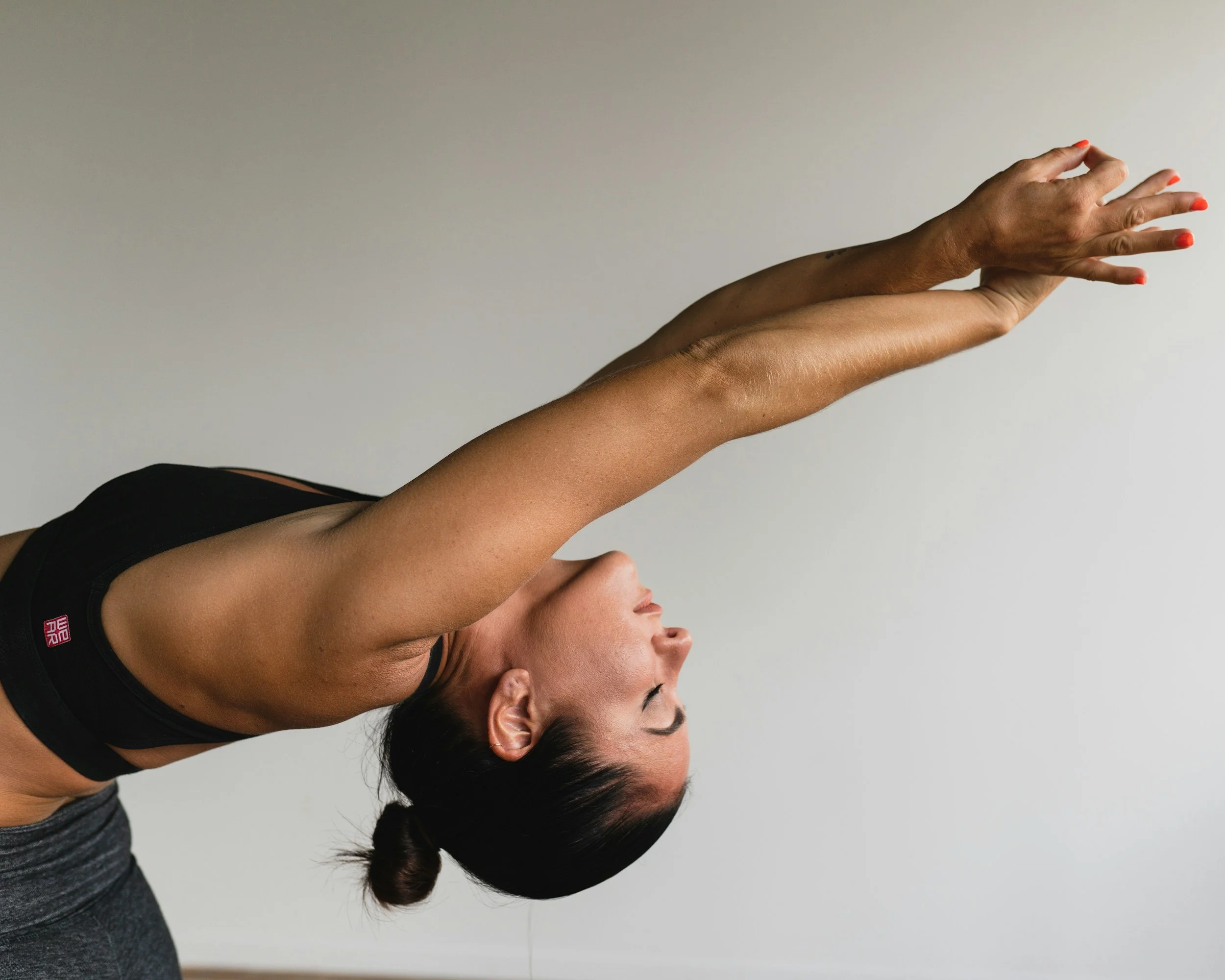
Reclaiming presence through body, breath, and inner truth
Introduction: The Body as a Compass for Wholeness
When we think of yoga, we often picture movement — postures, flows, and balance. But at its essence, yoga was never only about the body. It was about integration, the return to inner stillness after fragmentation.
For those healing from trauma, chronic stress, or emotional overwhelm, the Eight Limbs of Yoga offer more than spiritual philosophy. They’re a practical, embodied roadmap for nervous system regulation, self-connection, and long-term healing. They help us reconnect with our bodies, rebuild inner trust, and return to presence at a pace that feels safe.
The Eight Limbs: A Living Framework for Healing
First outlined by the sage Patanjali in the Yoga Sutras, the Eight Limbs describe a progression from external practices to internal liberation — from the outer world toward the inner one.
Each limb can be understood as a layer in trauma healing, restoring balance to the body, breath, mind, and spirit.
1. Yamas — The Ethics of Relationship
The Yamas guide how we relate to others and the world around us. They create relational safety and integrity.
For trauma recovery, the Yamas remind us that safety begins in relationship — with boundaries, honesty, and compassion.
Ahimsa (Non-violence): Meeting your healing with gentleness rather than pressure.
Satya (Truthfulness): Honoring the truth of your experiences with compassion instead of avoidance.
Asteya (Non-stealing): Reclaiming your time, energy, and agency after trauma.
Brahmacharya (Balance): Protecting your energy from what drains, overwhelms, or overstimulates.
Aparigraha (Non-grasping): Releasing perfectionism and the urge to “arrive.”
Healing begins here — in how we relate to our own healing journey.
2. Niyamas — The Inner Ethics of Self-Connection
The Niyamas guide how we care for our inner world — our patterns, habits, and inner ecosystem.
Saucha (Purity): Clearing out what feels heavy, toxic, or chaotic — physically or emotionally.
Santosha (Contentment): Finding small moments of enough-ness, even while healing unfolds.
Tapas (Discipline): Gentle consistency — showing up for yourself with devotion, not force.
Svadhyaya (Self-study): Curious, shame-free exploration of triggers, parts, and patterns.
Ishvara Pranidhana (Surrender): Trusting the larger intelligence moving through your healing — Spirit, Source, or simply Life.
The Niyamas reconnect you to your inner sanctuary — your own center.
3. Asana — Returning to the Language of the Body
Asana, the physical practice of yoga, is the doorway to embodied healing.
Through movement, we rebuild relationship with the body — not as something to control, but as an ally to listen to.
Each pose becomes an inquiry:
“Can I meet this sensation with compassion instead of fear or judgment?”
Asana cultivates interoception, rebuilding trust between body and mind. It teaches regulation through breath and grounding rather than tension and collapse.
4. Pranayama — The Breath as a Bridge to Safety
Pranayama connects breath to nervous system regulation.
Every exhale cues safety.
Every inhale offers beginning again.
Breathwork supports trauma healing by shifting the body toward parasympathetic calm. Even simple practices — extended exhale, box breathing, humming for the vagus nerve — become portals to peace.
Breath is presence made visible.
5. Pratyahara — Turning Inward
Pratyahara invites us to withdraw from overstimulation and reconnect with our internal world.
For survivors of trauma, turning inward can feel unfamiliar — or unsafe.
This limb teaches gentle inner safety through grounding, rest, and mindful withdrawal from overwhelm. It helps the body learn that stillness can be supportive, not threatening.
6. Dharana — The Practice of Focused Attention
Dharana develops focused awareness — keeping the mind anchored in one breath, one sensation, one moment.
It strengthens the capacity to stay present without becoming overwhelmed.
This might look like:
Tracking the breath
Repeating a mantra
Focusing on a grounded sensation
Over time, focus becomes stability — the inner sense of “I am here.”
7. Dhyana — Meditation and Embodied Flow
When attention softens into sustained presence, it becomes Dhyana, or effortless meditation.
In trauma healing, this often occurs naturally:
during yoga
in nature
through art
through sound baths
in moments of quiet connection
Dhyana reflects a regulated nervous system — alert yet calm, soft yet awake.
8. Samadhi — Integration and Inner Wholeness
Often described as enlightenment, Samadhi can also be understood as integration — when mind, body, and spirit move in harmony.
It is the quiet knowing:
“I am safe enough to be here.”
Samadhi isn't a finish line — it's a state of embodied presence and inner unity that becomes available through deep regulation and self-connection.
The Eight Limbs as a Map for Trauma-Informed Healing
Together, the Eight Limbs reflect the natural arc of healing:
1. Establish Safety
Yamas & Niyamas
2. Reconnect With the Body
Asana & Pranayama
3. Build Inner Awareness
Pratyahara & Dharana
4. Deepen Presence
Dhyana & Samadhi
This is not a ladder to climb — it’s a circle of practices you return to again and again, each time with a little more presence and compassion.
How Body & Mind Collective Integrates the Eight Limbs
At Body & Mind Collective, this framework is woven into a trauma-informed, somatic approach that honors the whole person.
We integrate the Eight Limbs into healing by:
Using the body as a source of truth and safety
Gentle movement, grounding, and somatic awareness help clients reconnect to their bodies in ways that feel safe and empowering.
Supporting breath-led regulation
Breathwork practices are introduced slowly and intentionally to support nervous system stabilization.
Encouraging mindful self-study
Through parts work, IFS-informed approaches, journaling prompts, and guided reflection, clients explore patterns with compassion rather than shame.
Creating space for integration—not performance
Healing is not about doing yoga “correctly.”
It’s about cultivating presence, honoring your pace, and rebuilding trust in yourself.
Blending therapy, somatic practices, and mindful spirituality
We honor the Eight Limbs not as rigid steps but as a living roadmap — a guide back to wholeness through body, breath, and inner truth.
Ready to Explore Trauma-Informed Yoga & Somatic Healing?
At Body & Mind Collective, we integrate somatic therapy, breathwork, and gentle mind-body practices to help you reconnect with safety, presence, and your inner truth.
Whether you're navigating trauma, anxiety, burnout, or emotional overwhelm, our sessions blend talk therapy with body-based approaches designed to support real, lasting healing.
If this framework resonates with you, you don’t have to walk the path alone.
You deserve support that honors your body, your pace, and your story.
👉 Book a session or learn more at Body & Mind Collective.
